


Why Glutathione Matters for Chemical Sensitivity and MTHFR Variants
Authors:

Ashley Palmer
Nutritional Therapy Practitioner, Health & Wellness Expert
Key Takeaways:
You walk into the store and immediately feel it. Cleaning product fumes hit first, then synthetic fragrances from the laundry aisle. Your sinuses burn, brain fog rolls in, and your body sounds every alarm while other shoppers browse normally.
There's a real, biological reason this is happening, and more importantly, there are solutions that don't require living in a bubble. Chemical sensitivity isn't a personal shortcoming; it's your body signaling that your detox defenses need support.
For people dealing with multiple chemical sensitivity, especially with MTHFR variants, this scenario points to something important about cellular health. Both chemical sensitivity and MTHFR challenges stem from the same fundamental issue: cellular processing capacity.
While most approaches treat chemical sensitivity and MTHFR variants as separate problems requiring different solutions, the cellular health perspective recognizes they're interconnected challenges. When your 40 trillion cells can't process environmental and metabolic demands efficiently, both chemical sensitivity and MTHFR-related symptoms emerge from the same overwhelmed cellular systems.
In this blog, we'll explore how glutathione connects both conditions at the cellular level, why other approaches often fall short, and how supporting your cellular foundation can restore your body's natural resilience to environmental challenges.
Table of Contents:
-
Understanding Chemical Sensitivity
-
How Chemical Sensitivity Works in the Body
-
Signs Your Body May Be Struggling With Environmental Processing
-
Why Chemical Sensitivity Becomes an Issue for So Many People Today
-
Supporting Your Body's Environmental Processing More Effectively
-
How Glutathione Supports Cellular Function in Chemical Sensitivity and MTHFR
-
Restoring Your Natural Chemical Resilience
Understanding Chemical Sensitivity
If you react strongly to fragrances, cleaners, or other environmental exposures, the issue usually isn't the exposure itself; it's how well your body can process and clear those compounds (aka clearance). Chemical sensitivity happens when your body's processing systems get overwhelmed by everyday exposures. Every day, your cells handle thousands of different compounds, from the fragrances in your shampoo to exhaust fumes in traffic. When your cellular processing capacity gets maxed out, even normal exposures can trigger reactions that other people don't experience.
Multiple chemical sensitivity isn't about everyday chemicals being inherently dangerous. It's about your cells getting overloaded trying to process everything. Your body starts activating protective responses to prevent further overwhelm, which is actually a smart survival mechanism.
Why Your Body's Processing Efficiency Matters So Much
Your cells are constantly juggling multiple jobs: making energy, maintaining their protective barriers, communicating with neighboring cells, and dealing with whatever environmental challenges come their way. It's like running a busy household while also managing a full-time job, and still making time for self-care.
When everything runs smoothly, you maintain what we call chemical resilience. Your body processes, neutralizes, and eliminates compounds without getting overwhelmed. But when your cellular systems become strained, even small additional exposures can trigger system-wide stress responses that show up as chemical sensitivity symptoms.
How Chemical Sensitivity Works in the Body
Chemical sensitivity involves multiple body systems working together to process environmental exposures. When you understand how these systems coordinate, it becomes clear why supporting your body's natural processing capacity addresses the root cause rather than just managing symptoms.
How Your Body Processes Chemical Exposures
Here's what happens when your body encounters chemicals: Your liver works around the clock to break down everything from cleaning products to car exhaust to perfumes. Meanwhile, your cellular methylation cycle acts like a cellular maintenance crew, supporting both detox and repair processes. And throughout it all, glutathione works as your body's master antioxidant, protecting your cells from damage.
Think of these systems as a well-coordinated team. When this teamwork flows smoothly, your body can handle normal chemical exposures without breaking a sweat.
When Things Work vs. When They Don't
When your detox systems have what they need, chemical exposures get processed smoothly and you can walk through the cleaning aisle without your nervous system sounding alarms. But when these systems become overwhelmed, compounds start backing up, creating stress in your cells and triggering the inflammatory responses that make you feel awful around everyday chemicals.
Signs Your Body May Be Struggling With Environmental Processing
Chemical sensitivity symptoms often develop gradually as your detox capacity becomes overwhelmed. You might notice immediate reactions to fragrances, cleaning products, or building materials that didn't bother you before, plus increased sensitivity to multiple substances rather than just one trigger.
Common symptoms following exposures include:
-
Brain fog
-
Headaches
-
Fatigue
-
Respiratory issues
-
Skin reactions
-
Digestive disturbances
-
Sleep disruption
These symptoms typically improve with avoidance but return quickly upon re-exposure, indicating system strain rather than true allergies.
Why Chemical Sensitivity Becomes an Issue for So Many People Today
Modern Environmental Stressors
Today's chemical exposure differs dramatically from what human detox systems evolved to handle. We encounter synthetic compounds in air fresheners, building materials, personal care products, and cleaning supplies that didn't exist generations ago.
Many people also face nutritional deficiencies that impair detoxification function. Standard diets often lack the essential nutrients required for optimal cellular function and glutathione production, while processed foods often contain damaged fatty acids that can actually increase the toxic burden your body needs to process.
Why Common Approaches Often Fall Short
Most conventional approaches treat chemical sensitivity and MTHFR variants as separate, unrelated problems requiring different solutions. This fragmented thinking misses the fundamental cellular health connection that links both challenges.
Symptom-focused strategies avoid triggers but don't address why cellular processing systems became overwhelmed initially. Similarly, standard MTHFR protocols often focus on isolated nutrients without considering how cellular capacity affects the body's ability to utilize those nutrients effectively.
The cellular health approach differs from targeting individual symptoms or pathways. When your cells can't process environmental and metabolic demands efficiently, simply avoiding triggers or adding isolated supplements doesn't restore the underlying processing capacity. This integrated approach addresses root causes rather than managing symptoms.
Supporting Your Body's Environmental Processing More Effectively
Foundational Support
Start with the nutrients your cells need: B vitamins for methylation support, minerals for enzyme function, and more sulfur-containing foods for gentle toxin binding and elimination. This foundational approach supports cellular communication networks that coordinate detoxification across all your body's systems. Of course, good sleep and daily stress management are also essential.
Reducing unnecessary burden helps prevent cellular overwhelm. Start with simple swaps: replace one fragranced product with a fragrance-free version each week, try wool dryer balls instead of scented dryer sheets, and stay adequately hydrated to support cellular waste elimination.
Targeted Support for Chemical Sensitivity and MTHFR
For people with MTHFR variants or chemical sensitivity, targeted support can restore processing capacity more effectively. Clinical research demonstrates that glutathione supplementation provides significant cellular protection and reduces oxidative damage throughout the body.*
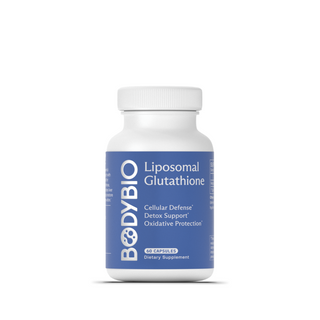
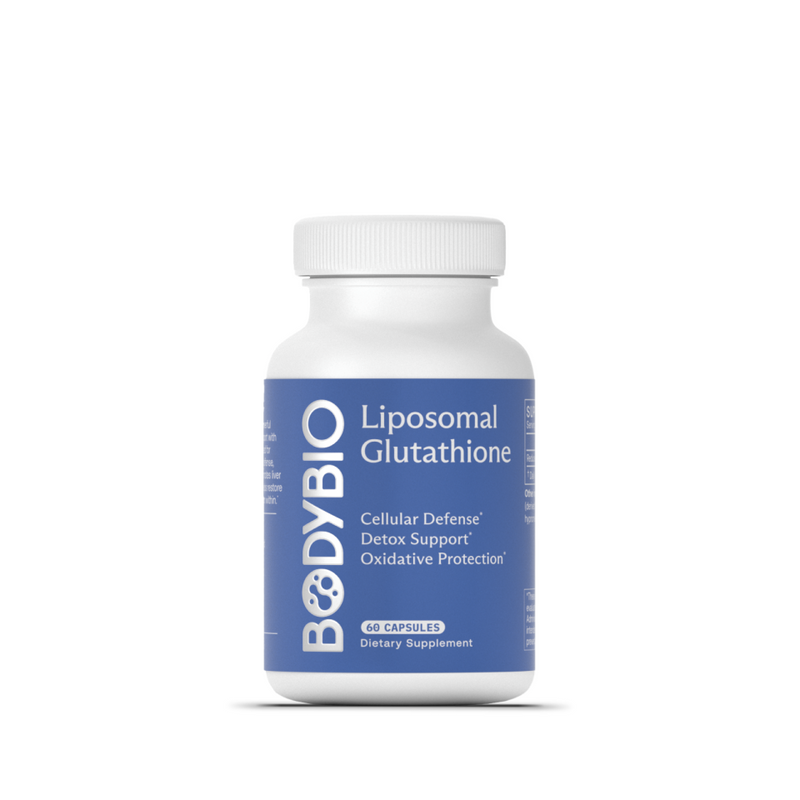
MTHFR variants directly impair methylation efficiency, reducing each cell's capacity to produce adequate glutathione. BodyBio Liposomal Glutathione supports cellular health from the ground up, providing the antioxidant protection every cell needs to maintain its processing capacity.* The liposomal delivery ensures glutathione reaches cellular sites throughout your body, not just liver detox pathways.
How Glutathione Supports Cellular Function in Chemical Sensitivity and MTHFR
Chemical sensitivity and MTHFR variants both stem from the same cellular processing limitations rather than separate, unrelated problems. This connection reflects the fundamental truth behind BodyBio's philosophy: when cells are supported, the body functions more efficiently as a whole.
The Foundation That Connects Everything
Chemical sensitivity and MTHFR variants both come down to the same basic issue: your body's processing systems getting overwhelmed. Your trillions of cells work together like a massive team, where everything from cell membrane health to energy production affects how well you handle environmental exposures.
Cell membranes are your first line of defense. Glutathione protects these cellular barriers from oxidative damage during chemical processing, maintaining their ability to selectively filter what enters and exits your cells. When membranes function properly, they can efficiently eliminate toxins while protecting cellular contents.
Your ability to handle chemicals also depends heavily on having enough cellular energy. MTHFR variants can limit this energy production by affecting methylation, while chemical sensitivity often reflects your body running low on processing energy. Glutathione supports mitochondrial function, helping maintain the energy production that powers detoxification processes.*
Perhaps most importantly, glutathione enables communication between cellular systems. It protects the lipid membranes that allow cells to send signals throughout your body, coordinating detox efforts across different organs and systems. This cellular communication ensures your immune system can distinguish between actual threats and normal environmental exposures, reducing inappropriate reactions.
The result is positive feedback loops: better cellular health improves your body's ability to handle environmental stressors while reducing inflammatory responses. This integrated approach addresses root causes rather than managing individual symptoms.
Restoring Your Natural Chemical Resilience
Chemical sensitivity and MTHFR variants don't require separate treatment approaches when you understand their shared foundation. Let’s face it: avoiding chemicals in our modern world is nearly impossible. Instead, supporting cellular capacity helps restore your body's natural resilience to handle everyday environmental exposures.
Rather than requiring complete environmental control, the cellular approach focuses on strengthening the foundation that makes everything else work better. When cells are supported, the body functions more efficiently as a whole.
Support your cellular detox capacity with BodyBio Liposomal Glutathione.*

