





Family Owned & Operated, Since 1998
Manufactured in Millville, New Jersey
Doctor Trusted, Pioneers in Cellular Health
Always Third Party Tested & Verified
Calcium Magnesium Butyrate Ingredients
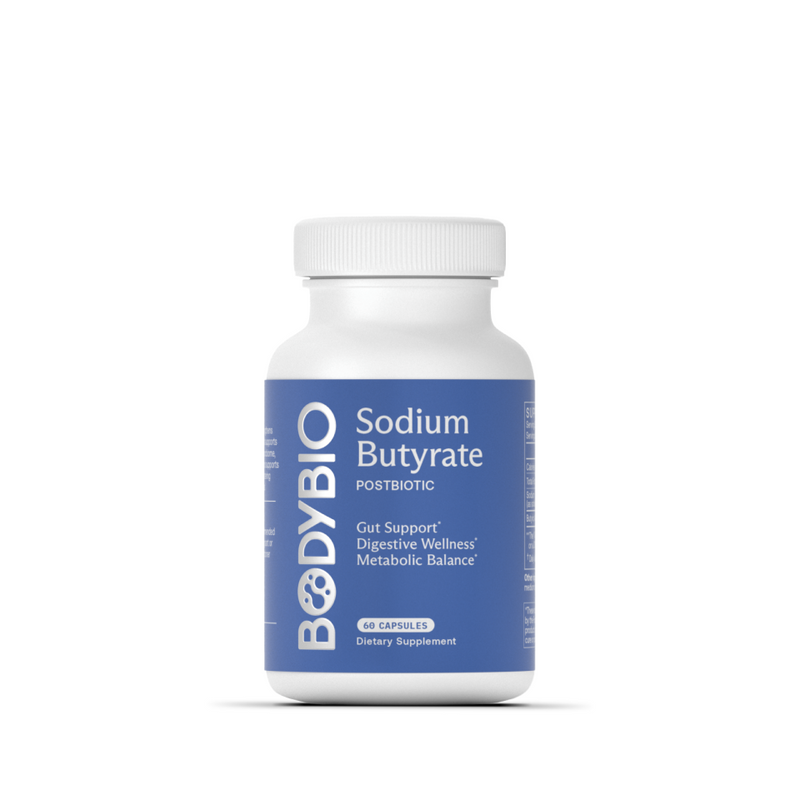
Sodium Butyrate ingredients
Butyrate Supplement Facts
- Type: Sodium
- Serving Size: 2 capsules (individual capsule size: 23mm)
- Servings Per Container: 30 (60 Count); 50 (100 Count)
| Amount Per Serving | Amount Quantity | % Daily Value* |
|---|---|---|
| Calories | 10 | |
| Total Fat | 1.5g | 2% |
| Sodium (as sodium hydroxide) | 313 mg | 14% |
| Butyric acid | 1200 mg | ** |
Butyrate Supplement Facts
- Type: Calcium/Magnesium
- Serving Size: 2 capsules (individual capsule size: 23mm)
- Servings Per Container: 50 (100 count); 125 (250 count)
| Amount Per Serving | Amount Quantity | % Daily Value* |
|---|---|---|
| Calories | 10 | |
| Total Fat | 1g | 1% |
| Calcium (as calcium hydroxide) | 160mg | 12% |
| Magnesium (as magnesium hydroxide) | 80mg | 19% |
| Butyric Acid | 1200mg | ** |
What to expect when you start taking BodyBio Butyrate
0-2 Weeks
2-4 Weeks
4 Weeks+

When your cells work better, everything works better.
Get all four essentials in one daily routine
Cell Essentials
Subscribe & Save price
$103.56
Regular price$125.76
with subscription



