
The Glutathione Buyer's Guide: What You Should Look For In a Glutathione Supplement
Authors:

Ashley Palmer
Nutritional Therapy Practitioner, Health & Wellness Expert
Ashley Palmer
Nutritional Therapy Practitioner, Health & Wellness Expert
Key Takeaways:
It's Thursday. You've slept, eaten, done everything right this week, and you still feel like you're running on the wrong fuel. That exhaustion and fatigue, you just can't shake it.
Most people chalk it up to stress, or a busy season, or just getting older. Sometimes that's true. But with so many supplements on the market making the same promises, it's hard to know what's actually worth trying, or why some products work and others don't.
A lot of that confusion clears up when you understand what's happening at the cellular level. That's where formulation starts to matter more than most labels will tell you.
Glutathione is a fragile molecule. What form it takes and how it is delivered to the body determines whether a supplement actually raises your cellular glutathione levels, or just gets broken down in your gut before it has a chance to do anything. In this blog, we'll cover what glutathione actually is, why your levels can change, and the specific factors that separate a supplement worth taking from one that isn’t.
Table of Contents:
-
What Is Glutathione?
-
How Glutathione Works in the Body
-
The Problem With Most Oral Glutathione Supplements
-
Signs Your Body May Be Running Low on Glutathione
-
The Difference Between True Liposomal and Liposomal-Labeled Products
-
Small Daily Decision, Real Cellular Difference
What Is Glutathione?
Glutathione is a small protein called a tripeptide, built from three amino acids your body already produces. The liver synthesizes it continuously, and it is present in virtually every cell in the body. Often called the body's master antioxidant, it is one of the few compounds the body makes specifically to manage oxidative stress.
Why The Body Relies on Glutathione
Glutathione’s primary job is protecting cells from oxidative damage (functional harm caused to your cells, proteins, and lipids). Free radicals are unstable molecules produced during normal metabolic processes. When free radicals accumulate faster than your body can neutralize them, they damage cellular structures.
Your body is designed to keep glutathione balanced. After glutathione neutralizes a free radical, the body can recycle it back into its active form and put it back to work. But these levels naturally decline with age and drop even further in response to chronic stress, inadequate sleep, poor dietary protein intake, heavy alcohol use, and prolonged exposure to environmental pollutants.
On the dietary and lifestyle side, sulfur-rich foods can help support your body's natural glutathione production: garlic, onions, eggs, and cruciferous vegetables like broccoli and Brussels sprouts. Protein from meat, fish, and legumes helps provide the building blocks the liver needs. Getting consistent sleep matters too, as glutathione synthesis is particularly active overnight.
For many people, these foundational habits are enough to keep things in a good place. For others, especially those managing significant oxidative stress, following a detox protocol, or preparing for pregnancy, demand can outpace what diet and lifestyle alone can replenish.
How Glutathione Works in the Body
Glutathione doesn't work in just one place. It shows up wherever the body is under oxidative pressure, which means it's active across several systems at once.
In the liver, it binds to toxins, alcohol byproducts, heavy metals, and environmental chemicals so the body can process and clear them safely. Most people don't realize how much the liver's ability to do its job depends on having enough glutathione available.
Alongside the immune system, it supports white blood cell function and helps keep the body's response to threats measured and effective. Immune cells burn through glutathione quickly when they're active, which is part of why illness, stress, and poor sleep can all chip away at your levels at the same time.
In methylation, the process your body uses for detoxification, mood regulation, and cell repair, glutathione plays a supporting role. Each system helps sustain the other, so when one is under pressure, the other tends to feel it.
And at the level of cell membranes, glutathione helps protect the fatty layer that surrounds each cell, keeping it intact and able to absorb nutrients and communicate properly. When that layer takes on oxidative damage, a lot of things downstream start to suffer.
What Happens When This Process Is Supported vs. Strained
When glutathione levels are well supported, these systems tend to work in rhythm with each other. The liver clears efficiently. Immune responses resolve without dragging on. Mitochondria produce energy steadily. The body handles ordinary demands, a stressful week, a drink with dinner, a seasonal illness, without falling significantly behind.
When levels are chronically low, the shift tends to be gradual rather than dramatic. The liver works harder without keeping pace. Immune cells lose some responsiveness. Mitochondria become more vulnerable, which shows up as fatigue that sleep doesn't fully resolve. It tends to look like reduced resilience across the board: slower recovery, less bandwidth, a body working harder to maintain the same ground.
The Problem With Most Oral Glutathione Supplements
Glutathione is fragile, and most standard oral supplements won’t survive the digestive environment. When you swallow a standard glutathione capsule or tablet, stomach acid and digestive enzymes begin breaking it down into its amino acid building blocks before it can be absorbed as glutathione. That means the form of glutathione and the delivery system used to get it to the cells both matter enormously.
Reduced vs. Oxidized Glutathione
Glutathione exists in two states in the body: reduced glutathione, known as GSH, and oxidized glutathione, known as GSSG. Reduced glutathione is the active, usable form. It is what neutralizes free radicals and performs the protective work your cells depend on. Oxidized glutathione is the spent form, after it has done its job.
For a supplement to be effective, it needs to contain the reduced form. Look for "reduced glutathione," "L-glutathione (reduced)," or "GSH" on the label. A product that simply lists "glutathione" without specifying the form is worth a closer look before you buy.
What Liposomal Delivery Actually Means
Liposomal delivery is the most well-researched approach to solving the absorption problem. Liposomes are tiny spherical particles made of phospholipids, the same material that forms your own cell membranes. When glutathione is encapsulated inside a liposome, the phospholipid coating protects it through the digestive process.
The liposome is able to travel through your stomach and small intestine intact. When it reaches your gut lining, it releases its contents for absorption into the bloodstream, and from there, into the cells that need it. Because liposomes are made of the same phospholipid material as cell membranes, they are able to merge with the membrane and deliver glutathione directly inside the cell, something a standard oral supplement cannot do.
Signs Your Body May Be Running Low on Glutathione
Because glutathione works at the cellular level across so many systems, the signs of declining levels rarely point to one obvious cause. They tend to show up as a general daily drag: things that are easy to attribute to stress, aging, or just a rough stretch.
Some patterns worth paying attention to:
-
Fatigue that doesn't resolve with rest. When mitochondria can't produce energy efficiently, the tiredness is different. It sits underneath everything, even after a full night of sleep.
-
Getting sick more often, or taking longer to recover. Glutathione plays a direct role in immune cell function. When levels drop, the immune system loses some of its responsiveness.
-
Brain fog or difficulty concentrating. When antioxidant support in the brain drops, cognitive clarity tends to go with it. Slower thinking, harder to focus, harder to find words.
-
Skin that looks dull or is slower to heal. Cellular turnover depends on healthy oxidative balance.
-
Increased sensitivity to alcohol, medications, or environmental exposures. The liver works harder to compensate when it doesn't have enough glutathione to keep up with the detox demand.
None of these symptoms point to one clear answer on their own, and they overlap with plenty of other things. But when several show up together, especially in someone dealing with ongoing stress, significant toxic load, or the gradual changes that come with age, glutathione is worth factoring in, particularly for anyone navigating specific health demands like liver support, detox, or prenatal and preconception health.
The Difference Between True Liposomal and Liposomal-Labeled Products
Many products labeled as liposomal don’t actually use liposomal technology. Some products simply mix glutathione powder with lecithin or suspend it in oil. These formulations don’t form true liposomes. These kinds of mixtures can clump in the digestive tract. Without a true liposomal formula, the absorption advantage disappears entirely.
When looking for a glutathione supplement, look for specifics about how the delivery system works. Phospholipids derived from soy or sunflower are a common and well-tolerated source for true liposomal formulations. Products that list only "sunflower lecithin" or note that glutathione is "suspended in oil" (without evidence of liposome formation) may not be delivering the absorption benefit the label implies. Of course, glutathione injections are also an option for adequate delivery and absorption as well.
What to Look for on the Label
Third-party testing is non-negotiable. Supplements aren't regulated with the same rigor as pharmaceuticals, which means the label doesn't always reflect what's actually in the capsule. Independent verification confirms potency, purity, and that what you're taking is free from contaminants; treat it as a baseline, not a bonus.
Beyond testing, look at the ingredient list. A product that relies on a long list of fillers and binders wasn't built with your cells in mind. And on dosage, most clinical research on glutathione supplementation sits in the 250 to 500 mg range. More isn't better if the delivery system can't support it.
Small Daily Decision, Real Cellular Difference
The supplement aisle is full of glutathione products that look the same on the outside. The label says liposomal, the price seems reasonable, the promises are familiar… But glutathione isn't complicated once you know what to look for. Your body already understands how to use it; the question is whether the supplement you choose can actually get this powerful nutrient to your cells.
The four things that matter: reduced glutathione as the active form, true liposomal delivery that protects it through digestion and into your cells, third-party testing for purity and potency, and a clean ingredient list that supports rather than undermines the formula.
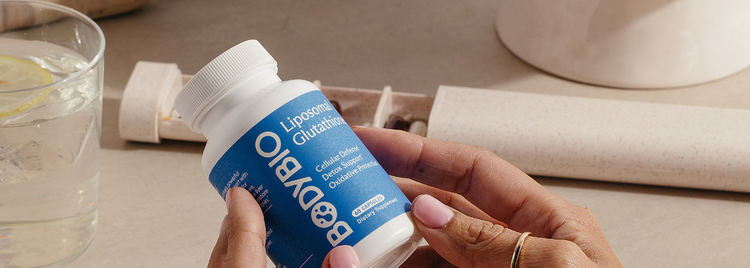
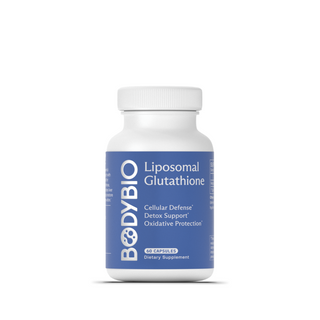
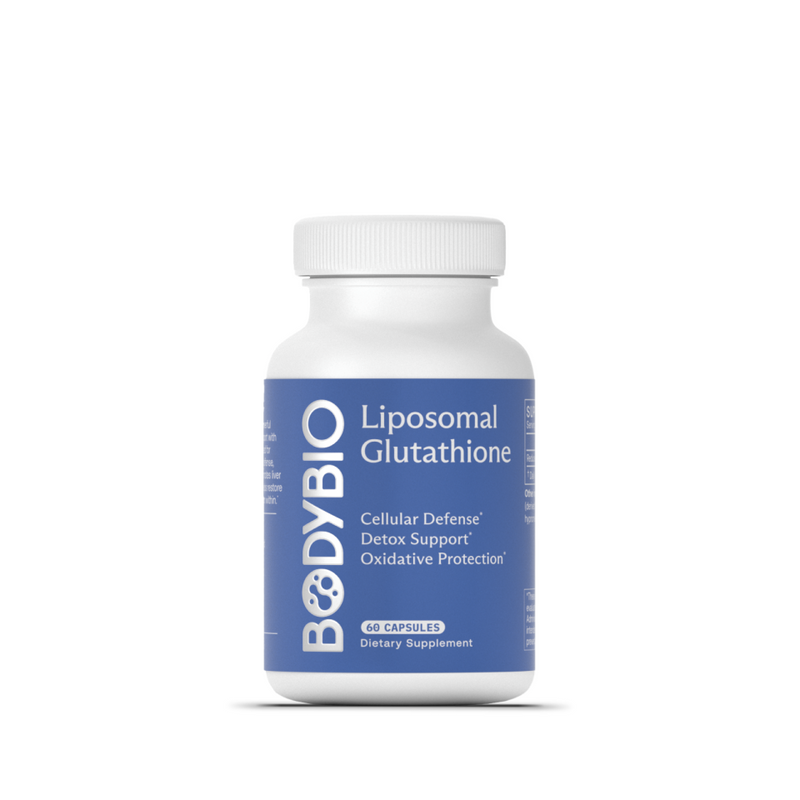
Support your body's antioxidant defenses with BodyBio Liposomal Glutathione.*