


Semaglutide Can Change What People Want to Eat. Here's What Your Gut Has to Do With It.
Authors:

Ashley Palmer
Nutritional Therapy Practitioner, Health & Wellness Expert
Key Takeaways:
Imagine you order the meal you've loved for a decade, and a few bites in, you realize you just don't care about it. You're not full, exactly. Just uninterested.
Many people taking semaglutide (a GLP-1 medication) describe this experience. Foods that were reliable favorites suddenly seem greasy, or too sweet, or just vaguely off. Scientific American captured the strangeness: a former food writer losing interest in cooking, longtime favorites tasting wrong.
The obvious explanation is that these medications make you feel full sooner. But fullness doesn't explain why a specific curry tastes bitter now, or why a go-to wine suddenly tastes off. Something more is happening, and it points to a hormone your body has been producing your whole life.
In this article, we'll look at what the newest research suggests semaglutide does to food preferences, what GLP-1 actually does inside the body, and where your gut microbiome and a short-chain fatty acid called butyrate fit into that system.
Table of Contents:
- Semaglutide Isn't Only Changing How Much People Eat
- Your Gut Was Making GLP-1 Long Before Ozempic
- Where the Microbiome Comes In
- Can Butyrate Support Natural GLP-1 Production?
- Why Butyrate Matters Beyond One Hormone
- Support the System, Not Just the Signal
- The Bigger Story Your Gut Was Already Telling
Semaglutide Isn't Only Changing How Much People Eat
Researchers are starting to document what users have been describing anecdotally.
A 2026 observational study of hospitalized Japanese patients with type 2 diabetes found that those on semaglutide showed significantly reduced preference for sweet carbohydrates, non-sweet carbohydrates, and non-sweet fats — while preferences for protein and dietary fiber stayed essentially unchanged. This wasn't a blanket loss of interest in food. It was a selective shift.
For someone focused on weight loss, eating less may be the point. Still, a reduced appetite for fats is worth paying attention to, since dietary fats supply essential fatty acids and help the body absorb fat-soluble vitamins.
Taste perception may also contribute. In a 16-week, randomized, placebo-controlled study of 30 women with obesity and PCOS, semaglutide improved overall taste recognition scores and altered brain activity in response to both food images and a sweet solution. In other words, participants' sense of taste sharpened, which may help explain why some foods suddenly seem too strong.
A 2025 study found the opposite: reduced sensitivity across all five basic tastes in people taking GLP-1 medications compared with matched non-users. That means the more accurate takeaway isn't "Ozempic makes food taste different" so much as "GLP-1 signaling reaches further into how we experience food than many researchers expected."
None of these studies settles the question on its own. But together they point somewhere useful: GLP-1 isn't only a satiety signal. It appears to play a role in how appealing food seems in the first place.
Your Gut Was Making GLP-1 Long Before Ozempic
Here's what often gets lost: GLP-1 wasn't invented by a pharmaceutical company.
GLP-1 is a hormone your intestines release on their own, produced mainly by specialized cells called enteroendocrine L-cells. These cells sit in the gut lining, acting as sensors that detect what's arriving from your meal and releasing hormones that coordinate the response.
GLP-1 helps regulate insulin release, slows how quickly the stomach empties, contributes to satiety, and carries information from the gut to the brain. GLP-1 medications didn't create a new pathway. They target one your body was already running.
But there's an important difference, and a lot of wellness marketing glosses over it. Your body's own GLP-1 is broken down within minutes of release. Semaglutide is engineered to resist that breakdown and activate GLP-1 receptors far more strongly, for far longer.
Supporting your body's own GLP-1 signaling through food or the microbiome isn't a lesser version of taking semaglutide. It's a different thing entirely.
Where the Microbiome Comes In
Your gut bacteria eat what you don't digest.
When fermentable fibers and resistant starch reach the colon, bacteria ferment them and produce short-chain fatty acids (SCFAs), mainly acetate, propionate, and butyrate. These aren't waste products. They're signaling molecules, and the cells lining your intestines are built to receive them.
Intestinal cells carry receptors, including FFAR2 (also called GPR43) and FFAR3, that detect short-chain fatty acids. When SCFAs bind these receptors on L-cells, they trigger an internal cascade that can influence the release of gut hormones, including GLP-1 and a related satiety hormone called PYY.
So the pathway is real: fiber arrives, microbes ferment it, metabolites are produced, gut cells sense them, hormones get released, and the gut communicates with the pancreas and the brain. That last link is worth sitting with — your gut and brain are in constant conversation, and food-derived microbial metabolites are part of what they're saying to each other.
The quick version of this compresses to: fiber → butyrate → GLP-1 → less hunger. The actual biology is an ecosystem with many signals, of which butyrate is one.
Can Butyrate Support Natural GLP-1 Production?
The mechanistic evidence is strong. The human evidence is thinner, but still developing.
A small 2026 study in adults with obesity found that oral sodium butyrate combined with L-arginine significantly increased circulating GLP-1. That's encouraging, but the study had only seven participants, butyrate wasn't tested on its own, and participants reported no difference in hunger or fullness.
By contrast, in a 2025 randomized controlled trial of 50 adults with obesity, people taking sodium butyrate alongside a reduced-calorie diet saw reductions in weight, BMI, and waist circumference, but their serum GLP-1 didn't change significantly.
A 2026 randomized, double-blind trial of 46 adults added more nuance. After 12 weeks of sodium butyrate plus a moderately reduced-calorie diet, participants with obesity lost a meaningful amount of weight. Participants who also had type 2 diabetes did not, although their blood sugar control improved.
That pattern echoes an earlier finding. In a 2018 study, four weeks of oral butyrate improved insulin sensitivity in lean men but not in men with metabolic syndrome.
Together, these suggest butyrate's effects depend heavily on metabolic context: who you are, what your microbiome looks like, and where the butyrate ends up. But GLP-1 is only part of the story.
Why Butyrate Matters Beyond One Hormone
Focusing only on GLP-1 undersells what butyrate does.
Butyrate is the primary fuel source for colonocytes, the cells lining your colon. Not a supporting nutrient. Their main energy supply. Those cells use butyrate to power the work of maintaining a functioning gut lining, the barrier that decides what passes from your digestive tract into your body and what doesn't.
This is where the cellular health picture comes together. A well-fueled intestinal lining supports a healthy gut barrier. A healthy barrier supports a stable environment for the microbial community living there. And that community produces metabolites that signal to the rest of the body — including the gut-to-brain communication involved in appetite and satiety.
Butyrate sits at the center of that loop as both fuel and message. That role holds regardless of what the GLP-1 research eventually concludes.
Support the System, Not Just the Signal
The takeaway isn't that you should be trying to maximize GLP-1. Your metabolism and gut function are more complex than one signal.
Lasting metabolic regulation runs on an ecosystem: microbial diversity, adequate fermentable fiber, well-nourished intestinal cells, an intact gut barrier, and steady communication between gut and brain. Semaglutide shows what happens when you push one signal in that system very hard. It doesn't show that one signal is the whole system, or the only way to modulate it.
Feeding that ecosystem starts with fiber-rich whole foods: vegetables, legumes, cooked-and-cooled potatoes and rice (good sources of resistant starch), and other plant foods your gut bacteria can thrive on. Give it time. Gut environments shift over weeks and months, not days.
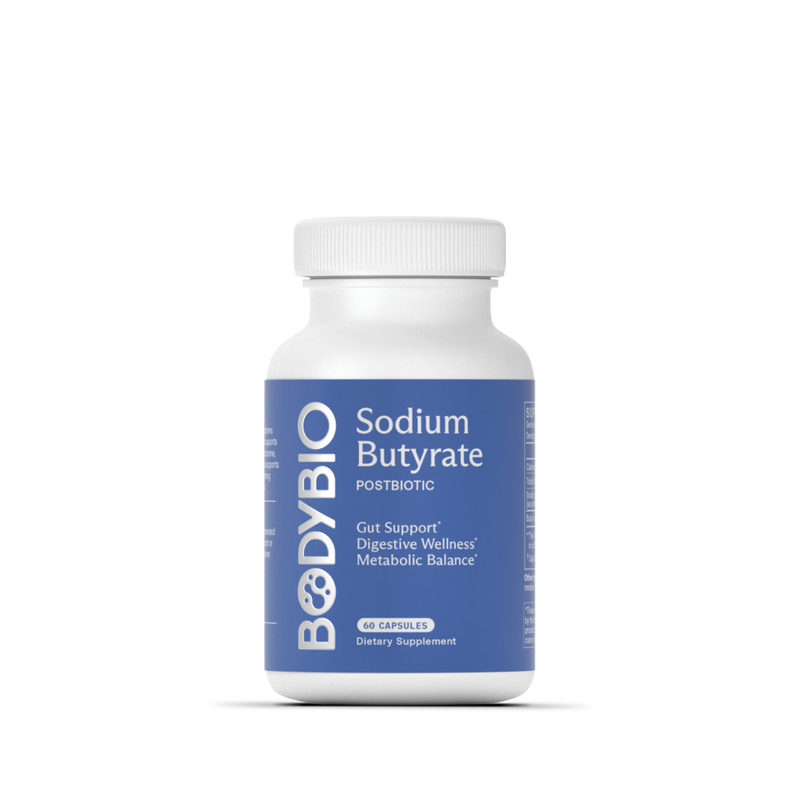
For targeted support, BodyBio Butyrate provides butyrate in supplement form to support the gut lining and a healthy microbiome.*
The Bigger Story Your Gut Was Already Telling
Semaglutide has taught researchers a great deal about how strongly GLP-1 signaling can influence not just hunger but desires: what sounds good, what tastes right, and what gets left on the plate.
And yet, the more interesting revelation may be how much was already happening without it. Every meal you eat feeds a microbial community that turns fiber into signaling molecules, which intestinal cells read and translate into messages sent onward to your pancreas and your brain. That conversation has been running your entire life.
Butyrate is one voice in that conversation. It fuels the cells that hold your gut barrier together and takes part in the signaling between your microbiome and the rest of your body. Supporting butyrate production in the gut won't replicate a pharmaceutical. It doesn't need to. Feeding the system well is its own goal, and the benefits build gradually, often in small shifts that are easy to miss at first.
Support your gut at the cellular level with BodyBio Butyrate.*
*These statements have not been evaluated by the Food and Drug Administration. This product is not intended to diagnose, treat, cure, or prevent any disease.
This article is for educational purposes only and is not a substitute for medical advice. If you're taking semaglutide or another GLP-1 medication, talk with your healthcare provider before adding new supplements.

