
B Complex Quality vs Quantity: What Your Cells Actually Need Every Day
Authors:

Ashley Palmer
Nutritional Therapy Practitioner, Health & Wellness Expert
Key Takeaways:
There are a lot of B complex supplements on the market, and honestly, a lot of them do more harm than good. Some B vitamin forms, like B12 cyanocobalamin, require extra conversion steps in the body to be of any use.
Most people's livers can't handle this conversion very well, which is why you might take B vitamins faithfully for months and still feel tired by mid-afternoon.
When you give your cells the right forms of B vitamins in the right amounts, people often notice their energy stays steady all day long within just a few weeks.* How much vitamin B-complex you actually need depends on getting forms your body recognizes and amounts that match your individual cellular demands.
Table of Contents:
-
What Is a Vitamin B-Complex?
-
Why Take B Vitamins Together
-
How Much Vitamin B Do You Actually Need?
-
Why Your B-Complex Needs Are Unique (And Probably Higher Than You Think)
-
How To Avoid The B-Complex Quality Crisis
-
Quality B-Complex Matters More Than Dosage
What Is a Vitamin B-Complex?
Vitamin B-complex is a group of eight water-soluble vitamins that your body uses to create energy from food and keep your nervous system running smoothly. Your body can't store these vitamins like it does with fat-soluble ones, so you need to replenish them daily—any excess water-soluble vitamins get flushed out when you urinate.
Each of these eight vitamins acts as a helper molecule in thousands of chemical reactions happening in your cells every second. When you're running low on B vitamins in their active forms (the molecular shapes your cells can actually use), your cellular energy production slows down, and you feel it as fatigue, brain fog, or a general sense of "running on empty."
The Different Types of B Vitamins and Their Functions
B-complex works better than B12 alone because each vitamin has a unique job in your cells.
|
B Vitamin |
Primary Function |
Deficiency Signs |
|
B1 (Thiamine) |
Converts glucose into brain energy |
Mental fog and difficulty concentrating |
|
B2 (Riboflavin) |
Powers cellular energy production in mitochondria |
Persistent fatigue and light sensitivity |
|
B3 (Niacin) |
Supports DNA repair processes in every cell |
Skin problems and cognitive decline |
|
B5 (Pantothenic Acid) |
Enables coenzyme A production for metabolism |
Common in stressed individuals; burnout symptoms |
|
B6 (Pyridoxine) |
Creates neurotransmitters for mood and cognition |
Mood changes and poor immune function |
|
B7 (Biotin) |
Maintains cellular membrane integrity |
Hair loss, brittle nails, skin problems |
|
B9 (Folate) |
Drives DNA synthesis and cellular division |
Fatigue and cognitive issues |
|
B12 (Cobalamin) |
Maintains nerve covering and blood cell formation |
Nerve tingling, memory problems |
Why Take B Vitamins Together
B vitamins share the same absorption pathways (the routes nutrients take to get into your bloodstream) in your gut and work together in overlapping cellular processes. This is why taking massive doses of individual B vitamins can create bottlenecks that actually worsen deficiency symptoms (like fatigue, brain fog, mood changes, and nerve problems) in other B vitamins.
When you take isolated megadoses like a 5,000 mcg B12 pill by itself or a 100mg B6 supplement, you're flooding one cellular pathway while potentially starving others. For example, high-dose folic acid (the synthetic form of folate, which is the natural B9 vitamin your body needs for DNA repair) can mask B12 deficiency, contributing to nerve problems.
Your cells work best when they get balanced nutrients, not massive isolated doses of single vitamins.
How Much Vitamin B Do You Actually Need?
Government Recommended Dietary Allowance (RDA) guidelines represent what the average person needs to avoid obvious deficiency diseases like beriberi and pellagra. These recommendations assume you're a healthy adult with perfect digestion, no stress, taking no medications, and eating a nutrient-dense whole foods diet. How many people does that actually describe?
The RDA represents the minimum amount recommended to prevent disease and mortality, not the amount you need for sustained energy and sharp mental function. Most people need significantly more than the RDA, especially when you consider how stress, medications, processed foods, and modern life in general deplete B vitamin stores faster than a basic diet can replace them.
|
B Vitamin |
RDA |
Optimal Range (dependant on health status) |
Key Considerations |
|
B1 (Thiamine) |
1.1-1.2 mg |
25-100 mg daily* |
Higher needs with diabetes, alcohol, high-carb diets |
|
B2 (Riboflavin) |
1.1-1.3 mg |
25-75 mg daily* |
Need increases with exercise, stress, aging |
|
B3 (Niacin) |
14-16 mg |
50-100 mg daily* |
Use niacinamide form to avoid flushing |
|
B5 (Pantothenic Acid) |
5 mg |
50-500 mg daily* |
Higher demands during chronic stress |
|
B6 (Pyridoxine) |
1.3-1.7 mg |
25-100 mg daily* |
Use P5P or pyroxidine HCl form; higher needs for mood/hormone issues |
|
B7 (Biotin) |
30 mcg |
300-5,000 mcg daily* |
|
|
B9 (Folate) |
400 mcg |
800+ mcg daily* |
Use methylfolate or folinic acid (a flexible and well-tolerated folate precursor) only; higher in pregnancy |
|
B12 (Cobalamin) |
2.4 mcg |
100-1,000 mcg daily* |
Use methylcobalamin form; much higher needs after age 50 |
Why Your B-Complex Needs Are Unique (And Probably Higher Than You Think)
Age, Lifestyle, and Dietary Habits
After age 50, your stomach doesn't make as much acid as it used to, which makes it harder to pull B vitamins out of the food you eat. This is especially true for vitamin B12, which needs plenty of stomach acid to separate from food proteins. So even if you're eating all the right foods, your body might not be getting what it needs.
Stress is another major factor. Chronic stress burns through pantothenic acid (B5) and pyridoxine (B6) faster than your morning coffee disappears. Now let’s add common medications to the mix. Acid blockers prevent B12 absorption, birth control pills deplete B6/B12/folate, and antibiotics wipe out the good gut bacteria that actually make some B vitamins for you.
Then there's the modern diet situation. Processed foods give you calories but none of the helper nutrients your body needs to actually use those calories effectively. High sugar intake? Your body needs extra thiamine just to process all that sweetness.
Pregnancy and Increased B-Vitamin Requirements
Pregnancy increases folate requirements dramatically for DNA synthesis and rapid fetal growth. Neural tube development (formation of the baby's brain and spinal cord) occurs during weeks 3-4, often before pregnancy is known. Inadequate folate during this critical window can have lasting consequences.
Vitamin B6 and B12 requirements also increase during pregnancy for neurotransmitter synthesis and red blood cell production, supporting both maternal nervous system function and fetal development.*
Signs Your Body Needs More Vitamin B
B vitamin deficiencies creep up slowly, with symptoms that can be easily mistaken for everyday life. But what if that 3 PM energy crash or the fact that you can't remember where you put your keys isn't just "getting older?" What if it's actually your cells running low on the nutrients they need to keep you sharp and energized?
Signs that often get brushed off but shouldn't be:
-
That tired feeling that gets worse as the day goes on (your cells aren't making energy efficiently)
-
Feeling like you need three cups of coffee just to function (riboflavin and thiamine deficiency)
-
Hair that's thinning or nails that break easily (biotin isn't doing its job)
-
Tingling in your hands or feet, or feeling "off balance" (B6 and B12 deficiency affecting your nerves)
How To Avoid The B-Complex Quality Crisis
Most B vitamin supplements are made with cheap synthetic forms that don't work well with your cellular machinery. The synthetic versions might have the same chemical formula as natural B vitamins, but they often lack the three-dimensional structure your cells recognize.
The forms that work with your body:
-
Methylcobalamin or adenosylcobalamin (not cyanocobalamin) for vitamin B12
-
Methylfolate or folinic acid (not synthetic folic acid) for folate (the natural B9 vitamin your body needs for DNA repair)
-
P5P (pyridoxal-5-phosphate) for vitamin B6
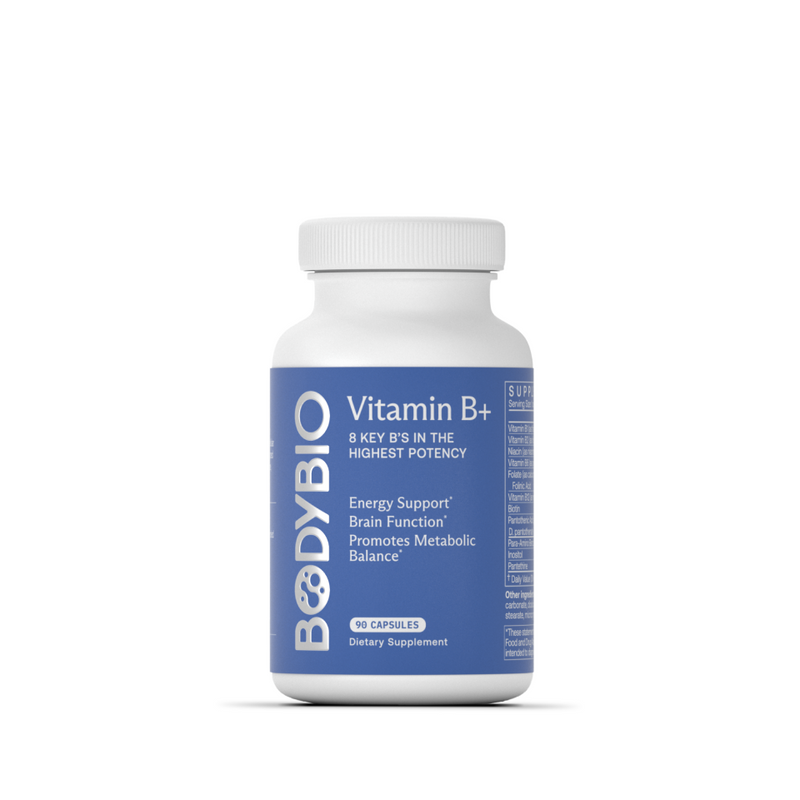
Skip anything with synthetic folic acid, cyanocobalamin B12, or massive individual doses that throw everything out of balance. Look for formulas that give you all the B vitamins in optimized and balanced ratios, like Bodybio’s Vitamin B+.*
Quality B-Complex Matters More Than Dosage
Most people need more B vitamins than the RDA suggests, especially if you're stressed, over 50, taking medications, or eating processed foods. But taking massive doses of cheap synthetic forms won't help if your cells can't use them.
Quality matters more than quantity. Look for active forms like methylcobalamin B12 and folinic acid instead of synthetic versions (i.e. folic acid). Your cells will thank you with better energy and sharper thinking.
Timing can also make a difference in how well your body absorbs these nutrients, so consider when you're taking your B vitamins along with what forms you're choosing.