


Resolution vs. Suppression: How SPMs Support the Body's Natural Inflammation Response
Authors:

Ashley Palmer
Nutritional Therapy Practitioner, Health & Wellness Expert
Key Takeaways:
You take ibuprofen for your knee. Four hours later, the pain's back.
This happens because suppressing inflammation and resolving inflammation are two completely different things. When you block inflammatory signals with medication, the swelling might go down temporarily. But at the cellular level, your body never got the message to actually clean up and restore normal function. Debris is still sitting there. Damage hasn't been repaired. Your immune cells are still on high alert.
What your body really needs is to complete the inflammatory cycle and get back to baseline. That requires specialized pro-resolving mediators (SPMs), molecules that guide inflammation through its natural resolution process. They don't just suppress symptoms. They help your body finish the natural process that it started.
Table of Contents:
-
How Inflammation Actually Works
-
NSAIDs: Suppression Without Resolution
-
Omega-3s: Building Blocks That Need Processing
-
SPMs: Completing the Inflammatory Cycle
-
Experience Resolution, Not Just Suppression
How Inflammation Actually Works
Inflammation isn't a switch that gets flipped on and off. It's a process with distinct phases, and most approaches to managing it only address phase one.
-
Phase One: Initiation. You get injured, infected, or stressed. Your body responds with increased blood flow, warmth, swelling, and a flood of immune cells to the area. This acute inflammatory response protects tissue and begins repair. Completely normal and necessary.
-
Phase Two: Resolution. Once the threat is contained, your body needs to actively wind down the inflammatory response, clear cellular debris, and restore tissue to normal function. This doesn't happen automatically. It requires specific molecular signals.
-
Phase Three: Return to homeostasis. Tissue structure and function are restored. Immune cells return to surveillance mode. Your body is back to baseline.
Most approaches to managing inflammation focus exclusively on phase one, interrupting the inflammatory signals. They don't support phase two at all, and the inflammation keeps coming back.
What Drives Resolution?
Phase two doesn't just happen on its own; your body produces specific signaling molecules called specialized pro-resolving mediators (SPMs) that actively guide the resolution process. These molecules tell immune cells to stop producing inflammatory signals, start cleaning up debris, and begin tissue repair.
SPMs are grouped into four principal families: lipoxins, resolvins (E-series and D-series), protectins, and maresins. These lipid mediators are made from the omega-3 fatty acids EPA and DHA via tightly regulated enzymatic pathways. When SPM production works efficiently, inflammation completes its cycle, and your body returns to its ‘normal.’ When it doesn't, inflammation can persist even after the initial threat is gone.
NSAIDs: Suppression Without Resolution
When you take ibuprofen or naproxen, you're blocking cyclooxygenase (COX) enzymes, the cellular machinery that converts arachidonic acid into prostaglandins. Block the enzymes, stop prostaglandin production, quiet the inflammatory signals. Simple. Effective. Temporary.
Six hours later, the drug clears your system, COX enzymes resume production, prostaglandins surge back, and the inflammation returns… Sometimes more intensely than before.
Why? Because suppressing signals doesn't complete the inflammatory cycle. Your immune cells never received instructions to transition from attack mode to cleanup mode. Cellular debris never got cleared. Damaged tissue never received proper repair signals. Inside the cell, you're stuck in phase one even when symptoms temporarily improve.
Suppression pauses the cycle. It doesn't guide your body back to your baseline.
Omega-3s: Building Blocks That Need Processing
Standard omega-3 supplements (whether from fish oil, krill oil, or algae) provide EPA (eicosapentaenoic acid) and DHA (docosahexaenoic acid), fatty acids that serve as building blocks for less inflammatory prostaglandins and for SPMs themselves.
This is progress. Omega-3 fatty acids shift your inflammatory balance in a healthier direction, and they supply the raw materials your body uses to produce specialized pro-resolving mediators. Getting adequate omega-3s is essential. They shift inflammatory signaling rather than shutting it down, and they provide the base your body needs for SPM production.
Your body needs to convert these omega-3s into active SPMs. This requires multiple enzyme processes. This conversion becomes less efficient with age, chronic stress, and inflammation itself.
The conditions that increase your need for SPMs (inflammation, stress, aging) are the same conditions that impair your ability to produce them. You might be taking omega-3s to support resolution, but your body might not be converting them efficiently enough to actually trigger that resolution phase.
SPMs: Completing the Inflammatory Cycle
Unlike NSAIDs that block inflammatory signals or omega-3s that need converting, SPMs are ready-to-use resolution signals. When they engage with receptors on immune cells, they change the cellular program. Macrophages (immune cells that both attack threats and clean up afterward) switch from attack mode to cleanup mode. Instead of producing more inflammatory signals, they start removing debris and supporting repair.
This triggers a coordinated resolution process. Immune cells stop overcrowding the inflamed area, and macrophages ramp up their cleanup work, clearing out dead cells and inflammatory waste before it piles up. Tissue repair signals activate, and the whole cellular environment begins shifting back to normal.
SPMs also help reduce discomfort by decreasing inflammatory mediators that affect nerve signaling.* But this isn't symptom suppression. It's what happens when inflammation actually completes its cycle, and your body returns to baseline.
NSAIDs pause inflammation. Omega-3s provide raw materials. SPMs guide the process to completion.
The SPM Production Challenge
If SPMs are so crucial, why doesn't everyone's body just make them from the omega-3s in fish oil?
Your body tries, but SPM creation is complex and easily disrupted. You need:
-
Adequate amounts of EPA and DHA (most people don't get enough)
-
Functioning lipoxygenase enzymes (these SPM-producing enzymes decline with age and get impaired by oxidative stress)
-
Healthy cell membranes where the conversion happens
-
Low levels of inflammation (which creates a catch-22 since inflammation impairs your ability to produce the very molecules you need to resolve it)
In studies of chronic pain conditions, researchers found that giving more DHA precursors didn't improve outcomes when SPM biosynthesis was already impaired. Aka, taking more fish oil couldn't overcome the conversion bottleneck.
Scientists have learned that having the raw materials isn't the same as achieving resolution. Having EPA and DHA available doesn't guarantee your cells can efficiently transform them into the SPMs that actually signal resolution.
Furthermore, not every fish oil contains SPMs. Refining, oxidation, and storage conditions can limit the presence or stability of any pro-resolving lipid intermediates. Most conventional fish oils contain EPA and DHA precursors, but do not contain measurable amounts of active SPMs themselves.
Why Resolution Matters at the Cell Level
This all happens at the cellular level. Cell membranes house the receptors that SPMs interact with, and these membranes control how cells respond to inflammatory signals and resolution signals alike.
When inflammation actually resolves instead of just getting suppressed, your cells can return to normal function. Damaged membrane structures get repaired. Mitochondria shift from defense mode back to energy production. The excessive signaling noise from inflammatory mediators clears out, letting cells communicate normally again.
This is why properly resolved inflammation doesn't leave you depleted the way chronic inflammation does. When the cycle completes, cells aren't accumulating ongoing damage. They're actually returning to their baseline state, which supports long-term cellular health and healthy aging.
Experience Resolution, Not Just Suppression
Inflammation isn't the enemy, but unresolved inflammation is.
Your body is designed to handle inflammatory responses, to initiate them when needed, run the necessary repair processes, and then return to baseline.
NSAIDs suppress inflammatory signals, which provides temporary relief but doesn't support completion of the cycle. Omega-3 supplements provide the building blocks your body needs to produce SPMs, but conversion efficiency varies and often declines exactly when you need it most. SPMs guide the resolution process directly, helping your body complete what it started.
The difference between suppression and resolution can give you a clearer picture when it comes to supporting your body's inflammatory response. It's not about blocking signals or simply providing raw materials; it's about supporting the active cellular process that helps your body return to homeostasis at the cellular level.
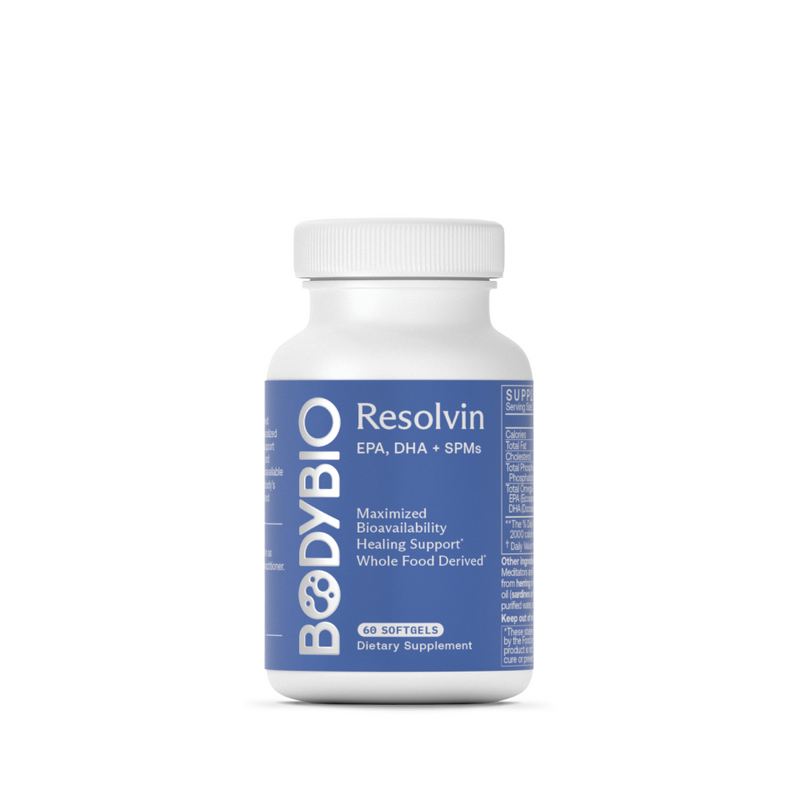
Support your body’s natural resolution processes with BodyBio Resolvin.*