

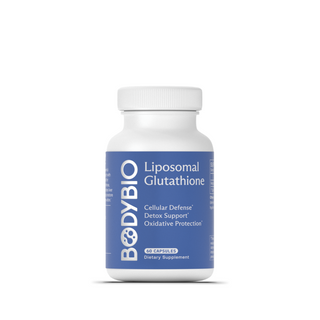

7 Reasons Glutathione Is Non-Negotiable for Fragrance Sensitivity
Fragrances are everywhere now — fabric softeners, hand soaps, candles, stores, other people. If your body struggles where others don't, the difference usually isn't the fragrance. It's how much detox capacity you have left.
For people whose bodies are especially sensitive to environmental inputs, glutathione is the molecule that determines how much your system can actually handle.
1
Glutathione Drives Toxin Elimination in the Liver
Glutathione is required for Phase II liver detox, where toxins are neutralized and prepared for removal — without it, toxins are more likely to recirculate than exit.*
2
Fragrance Sensitivity Often Means Your Detox System Is Already Maxed Out
When glutathione demand exceeds supply, even small exposures can trigger outsized reactions. Sensitivity is often a signal of depleted defense, not innate weakness.*
3
Some Bodies Are Wired to Need More Detox Support
Genetics play a real role in how efficiently your body produces and recycles glutathione. MTHFR variants — common and often undiagnosed — can impair methylation and reduce glutathione production, making fragrance reactions more intense even at low exposure levels.*
Glutathione Protects Cells Where Detox Begins
Detox happens at the cellular level first. Glutathione helps protect cell membranes from oxidative damage, supporting signaling and toxin handling at the source.*
5
Daily Exposure Requires Daily Defense
Chemical exposure is constant — from air, water, and materials. Consistent glutathione support helps the body recover from the ongoing chemical load.*
6
Skin Reactions Often Reflect Internal Detox Stress
The skin acts as a secondary detox pathway, and rashes, acne, and red, irritated skin indicate a body under too much detox pressure. Improved glutathione status is often reflected by calmer, more resilient skin over time.*
7
Consistency Matters More Than “Cleansing”
Glutathione works best as a daily support, not a short-term detox tool. Restoring capacity requires steady replenishment, not periodic intervention.*
Real Customers,
Real Benefits

Fragrance sensitivity isn't a character trait. It's a signal.
Your body is telling you its detox reserves are running low — and that consistent glutathione support can help change the math. No aggressive protocols. No forced detox. Just steady daily replenishment of the molecule your system depends on most.*

KEY RESEARCH REFERENCES
Kalamkar, S., Acharya, J., Kolappurath Madathil, A., Gajjar, V., Divate, U., Karandikar-Iyer, S., Goel, P., & Ghaskadbi, S. (2022). Randomized Clinical Trial of How Long-Term Glutathione Supplementation Offers Protection from Oxidative Damage and Improves HbA1c in Elderly Type 2 Diabetic Patients. Antioxidants, 11(5), 1026. https://doi.org/10.3390/antiox11051026
Labarrere, C. A., & Kassab, G. S. (2022). Glutathione: A Samsonian life-sustaining small molecule that protects against oxidative stress, ageing and damaging inflammation. Frontiers in nutrition, 9, 1007816. https://doi.org/10.3389/fnut.2022.1007816
Rossi, S., & Pitidis, A. (2018). Multiple Chemical Sensitivity: Review of the State of the Art in Epidemiology, Diagnosis, and Future Perspectives. Journal of occupational and environmental medicine, 60(2), 138–146. https://doi.org/10.1097/JOM.0000000000001215
Pastore, A., Federici, G., Bertini, E., & Piemonte, F. (2003). Analysis of glutathione: implication in redox and detoxification. Clinica chimica acta; international journal of clinical chemistry, 333(1), 19–39. https://doi.org/10.1016/s0009-8981(03)00200-6
Weschawalit, S., Thongthip, S., Phutrakool, P., & Asawanonda, P. (2017). Glutathione and its antiaging and antimelanogenic effects. Clinical, cosmetic and investigational dermatology, 10, 147–153. https://doi.org/10.2147/CCID.S128339
© 2026 BodyBio


